How to Improve Sleep Quality Without Sleeping Longer
March 10, 2026
The real problem usually isn't how many hours you sleep — it's how restorative they are. How to optimize the biology of sleep within the same timeframe.
Most people think the solution to feeling tired is simple: sleep more.
Go to bed earlier. Add another hour. Catch up on weekends.
But what if the real problem is not the number of hours you sleep, but the quality of those hours?
Sleep duration and sleep efficiency are two different things. You can spend eight hours in bed and still wake up drained. Meanwhile, someone else may sleep six and wake up sharp and refreshed.
The difference lies in how restorative those hours actually are.
Sleep quality depends on several biological factors working together. The first is sleep cycle integrity. Throughout the night, the body moves between light sleep, deep sleep, and REM sleep. If these cycles are repeatedly interrupted by discomfort, temperature changes, or unstable breathing, the brain never fully reaches sustained deep phases.
You may not remember waking up, but micro-arousals fragment your recovery.
Another key factor is spinal alignment. When the body is not properly supported, muscles remain subtly engaged to compensate for uneven pressure. Instead of fully relaxing, your nervous system stays partially active. Over time, this reduces recovery efficiency and contributes to morning stiffness or fatigue.
Breathing stability also influences sleep depth. Inconsistent airflow or poor positioning can lead to lighter sleep stages. Even mild breathing disruption decreases oxygen efficiency, affecting cognitive clarity and physical energy the next day.
Temperature regulation is equally critical. The body must slightly lower its core temperature to enter deep sleep. If the mattress traps excessive heat or feels too cold, it interferes with this process. Thermal imbalance often leads to increased movement and reduced REM stability.
Improving sleep quality without extending sleep time means optimizing these biological variables.
Consistency is foundational. Sleeping and waking at the same time each day strengthens circadian rhythm alignment. The brain learns when to release melatonin and when to activate cortisol, creating smoother transitions between sleep and wake states.
Environmental control is equally important. A stable, supportive sleep surface reduces pressure concentration and movement. When the body feels balanced, it enters deeper sleep stages faster and sustains them longer.
Advanced sleep systems are now designed to enhance this efficiency. Intelligent mattresses equipped with adaptive support technology monitor posture, redistribute pressure, and maintain spinal neutrality in real time. Instead of remaining static, the surface responds to how your body behaves throughout the night.
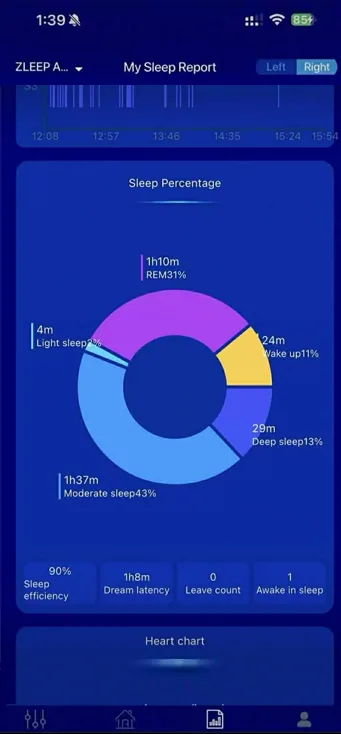
Some systems also track breathing patterns and sleep duration through embedded sensors, providing insight into sleep consistency and recovery trends. When you understand your patterns, behavioral adjustments become more precise.
The goal is not to sleep longer. The goal is to sleep better within the same timeframe.
Quality sleep is defined by sustained deep stages, reduced awakenings, balanced body alignment, and stable physiological rhythms. When these elements are optimized, six to seven high-efficiency hours can feel more restorative than eight fragmented ones.
In a culture that equates productivity with extended hours, recovery often gets overlooked. But performance, focus, and mood are directly tied to sleep efficiency, not just time spent in bed.
Sometimes the smartest upgrade is not adding more hours to your night.
It is improving what happens within them.
Ready to feel the difference?
Explore the Zleep AI collection and find the system built for the way you sleep.