Mattress for Snoring and Breathing Support
February 28, 2026
Snoring is often more than noise. How mattress support, spinal alignment, and gentle elevation can ease nighttime breathing — starting from beneath you.
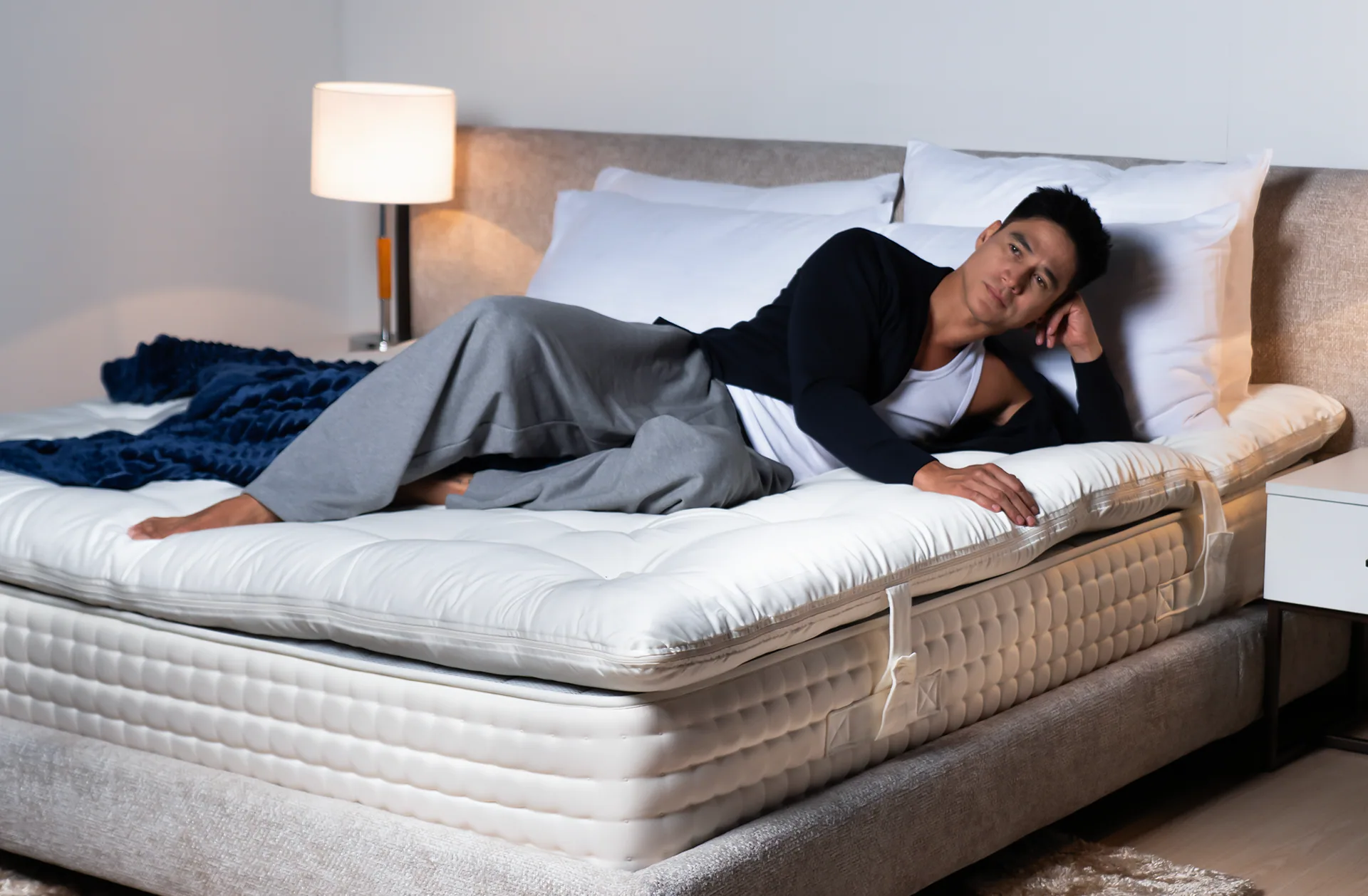
Snoring is often treated as a minor inconvenience. A joke between partners. A normal part of getting older.
But for many households in the Philippines, it is more than just noise. It disrupts sleep quality, affects breathing patterns, and leaves both partners waking up exhausted.
When people search for solutions to snoring, they usually look at pillows, nasal strips, or medical devices. Rarely does anyone ask a more important question: can your mattress be contributing to the problem?
The way your body is positioned during sleep directly affects airway openness. When the head, neck, and spine are not properly aligned, soft tissues in the throat can partially collapse, increasing airway resistance. This is one of the primary mechanical causes of snoring.
A mattress that is too soft allows the torso to sink excessively. This can tilt the neck forward and narrow the airway. On the other hand, a mattress that is too firm may create pressure buildup, causing restless movement and unstable positioning throughout the night. Both scenarios can worsen breathing quality.
Support and alignment are not just about back pain. They are directly connected to respiratory stability.
Snoring often increases when a person sleeps flat on their back. Slight upper body elevation has been shown to reduce airway obstruction by promoting better gravitational positioning of the tongue and soft tissues. However, stacking multiple pillows can create neck strain and inconsistent angles.
This is where adjustable intelligent sleep systems introduce a different approach.
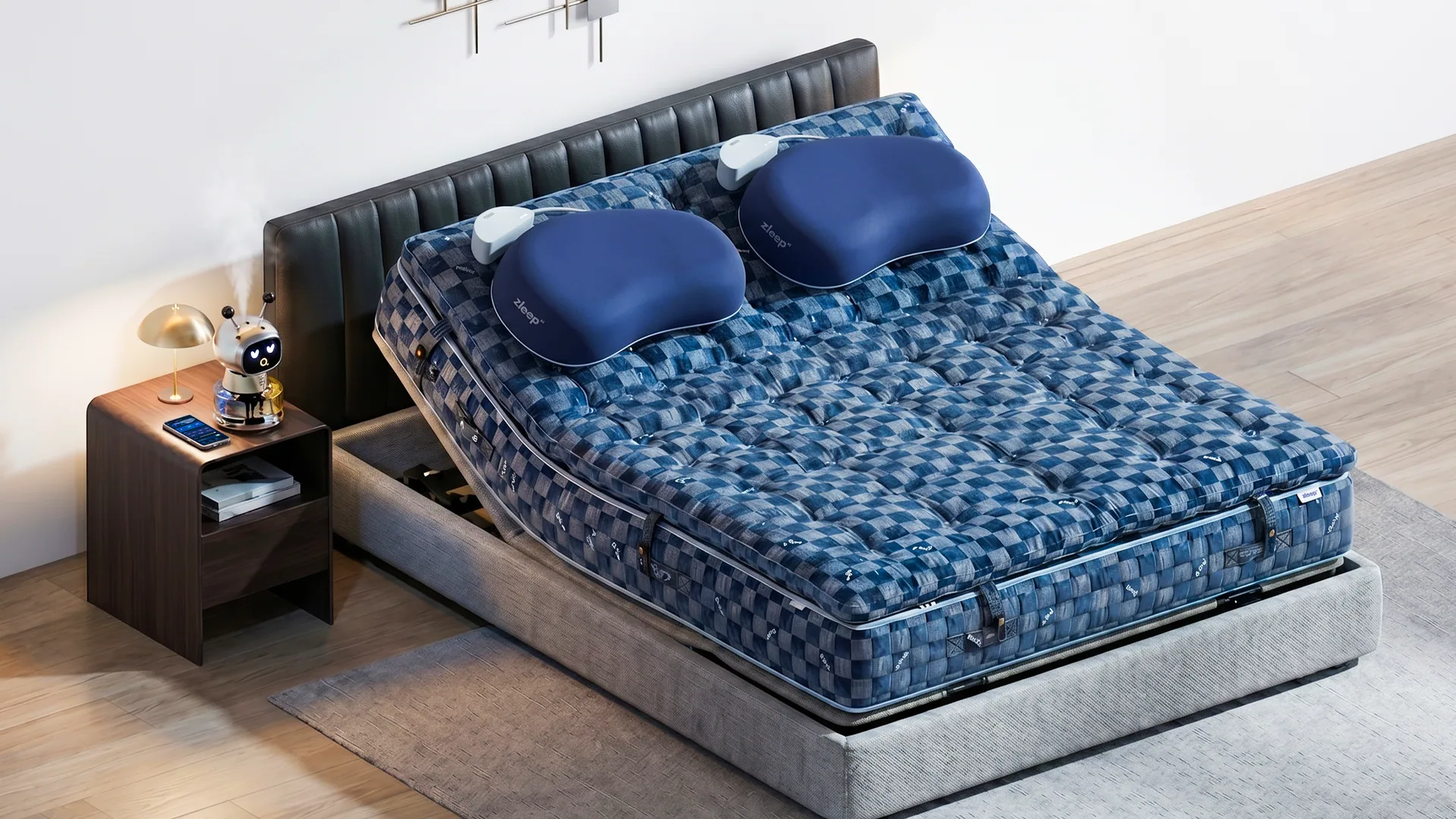
An advanced AI mattress with elevation capability allows controlled head and upper body positioning. Instead of improvised pillow stacking, the bed can gently raise the upper torso to an optimal angle for improved airflow. The elevation is stable, evenly distributed, and does not distort spinal alignment.
Some intelligent systems also monitor breathing rhythm and micro-movements throughout the night. By analyzing respiratory patterns, the system can detect irregular breathing behavior and adjust support responsiveness accordingly. This creates a more stable sleep environment that supports consistent airflow.
Breathing support is also influenced by pressure distribution. When the body is evenly supported and spinal alignment is preserved, muscular tension decreases. Reduced muscular strain contributes to smoother breathing cycles and deeper sleep stages.
Another overlooked factor is sleep fragmentation. Even if snoring is mild, repeated micro-awakenings caused by unstable positioning can prevent the body from entering deep restorative sleep. Over time, this leads to daytime fatigue, irritability, and reduced cognitive performance.
The solution is not simply stopping the sound of snoring. It is addressing the mechanical and positional factors behind it.
A mattress designed for breathing support focuses on three core elements: spinal neutrality, controlled elevation, and stable pressure redistribution. When these are optimized, airflow improves naturally without forcing unnatural posture.
It is important to note that severe or chronic snoring may indicate medical conditions such as obstructive sleep apnea and should be evaluated by a healthcare professional. However, for many individuals, improving sleep positioning and support can significantly reduce nighttime breathing disturbances.
Sleep is a full-body physiological process. When breathing improves, oxygen efficiency increases. When oxygen efficiency increases, recovery improves. And when recovery improves, mornings feel different.
Sometimes the most overlooked solution to snoring is not on the bedside table. It is beneath you.
Because breathing support starts with proper alignment.
Ready to feel the difference?
Explore the Zleep AI collection and find the system built for the way you sleep.